





Launch of the Global Coalition on Oral Health
On Monday, May 18th, the UN Member States of Brazil, Egypt, France, Mauritius, and the Philippines co-hosted a special side event that launched the Global Coalition on Oral Health.
Co-sponsored by IADR, the event earmarked the Coalition as a WHO-convened platform for collaborative, multisectoral action to support Member States in implementing the Global Oral Health Action Plan 2023-2030. Grounded in two core pillars, advocacy and knowledge sharing, the Coalition aims to drive action-oriented initiatives that support country-level implementation. The event also highlighted WHO’s Knowledge Action Portal on NCDs, which will include oral health as a mechanism to share implementation resources, country experiences, and partner contributions.
IADR President Prof. Jenny Gallagher participated in the moderated panel discussion, Turning Political Commitment into Action: Country and Partner Perspectives, where she emphasized the role of oral health research and implementation science in translating global commitments into measurable action. She also referenced the recently accepted publication, Advancing a Global Oral Health Research Agenda, which reflects the value of IADR’s global scientific forum for bringing together diverse research groups and networks to advance shared priorities, strengthen research capacity, support country learning, and inform integration of oral health within primary health care, NCD responses, and UHC agendas.
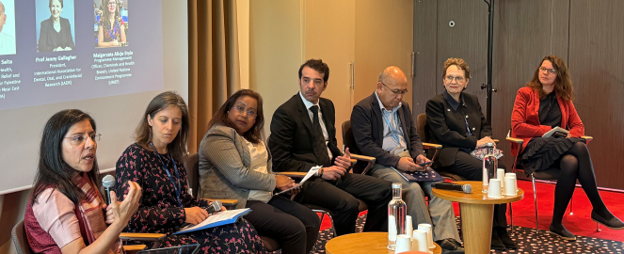
Dr. Maria Emanuel Ryan, represented the IADR Corporate Forum during the panel discussion Building a multisectoral movement. She highlighted the Corporate Task Force on Fluoride’s work to support evidence-based prevention, address fluoride misinformation, and identify priority research needs related to contested endpoints, including neurodevelopment and cognition, reproductive outcomes, and thyroid/endocrine interpretation. She also emphasized the importance of research and communication strategies to protect equitable access to proven preventive tools.
Through its support of and participation in the launch, IADR reaffirmed its commitment to advancing research, implementation science, and collaboration to support Member States in achieving UHC for oral health by 2030. Building on WHO direction, IADR will continue to work with global partners within the Coalition, to support this initiative and ensure that oral health policies are grounded in science, responsive to country needs, and aligned with the principle that there is no health without oral health.
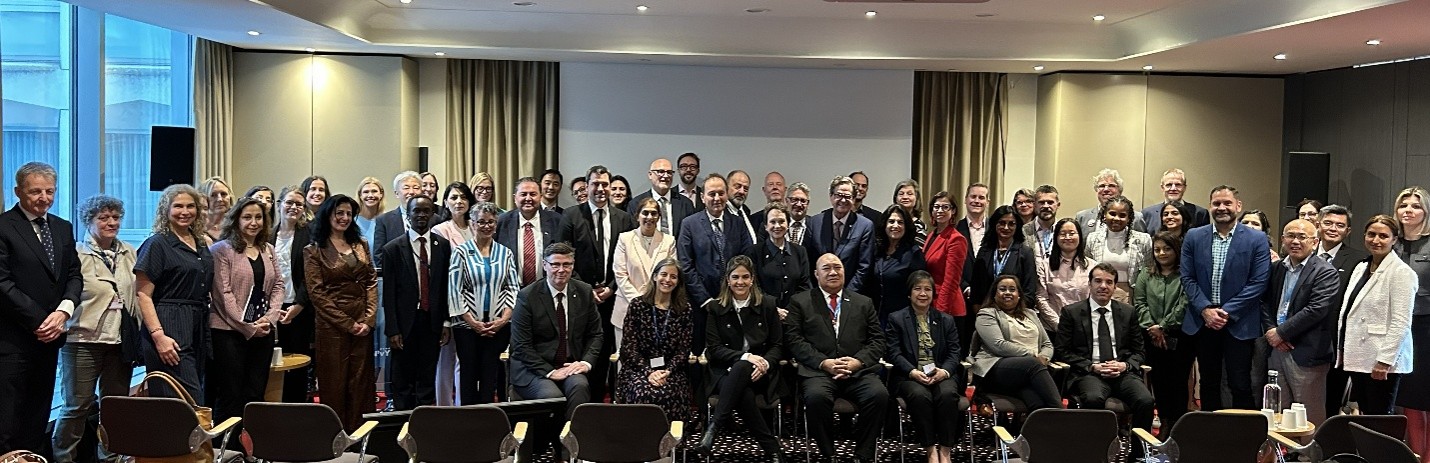
Health is Wealth: Why Investing in Health Professionals Pays Off
On Tuesday May 19th, Professor Gallagher participated in the aforementioned World Health Professions Alliance (WHPA) event. The event provided an opportunity to position oral health within broader discussions on health workforce investment, prevention, productivity, and health system strengthening.
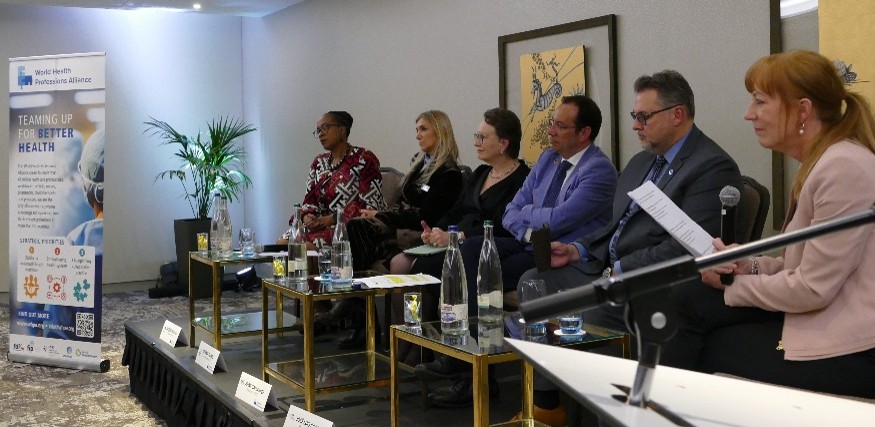
In alignment with IADR’s global research and policy priorities, Prof Gallagher emphasized that investing in health professionals is not simply a workforce issue, but a cost-effective strategy for improving population health, strengthening health systems, and advancing universal health coverage. Her intervention outlined three key messages: (i). oral health professionals are essential to addressing the global burden of disease; (ii). strategic investment in education, training, and workforce planning improves the quality, safety, and efficiency of care; and (iii). interprofessional collaboration is a cost-effective approach to strengthening health systems. She underscored that effective health systems require skilled, coordinated, and well-regulated teams capable of delivering prevention-oriented, person-centered care, particularly in rural and underserved communities. Collaborative care models can improve outcomes, support workforce retention, reduce preventable disease, and strengthen preparedness for future health challenges.
Launch of the Oral Health at Work: A Roadmap for Prevention, Productivity and Workforce Report
Simultaneously on Tuesday May 19th, Drs. Fox and Charles-Ayinde participated in a side event hosted by FDI World Dental Federation in collaboration with the Governments of the Republic of Ireland, the Republic of Mauritius, and Malaysia. 
The event launched FDI’s new report Oral Health at Work: A Roadmap for Prevention, Productivity and Workforce Well-being. The report highlights the growing importance of integrating oral health into workplace health and well-being strategies, and outlines opportunities for employers, insurers and policymakers to drive healthier, more productive workforces through stronger cross-sector collaboration.
Additionally, Ministries of Health, WHO, industry representatives, and dental professionals, created a dialogue on how to operationalize workplace oral health programs. The discussion highlighted the workplace as a powerful entry point for oral health promotion and workforce readiness, the economic case for investing in oral health, how the GOHAP can be operationalized through workplace initiatives, and the role of employers and the private sector in driving equitable, sustainable impact. During the open discussion, Drs. Fox and Charles-Ayinde underscored the importance of research in helping ministries evaluate health impacts, assess policy effectiveness, and generate evidence to inform other measures that can advance oral health including policies addressing sugar-sweetened beverages.
Goals House: Prevention That Works: High-Impact Solutions for Healthier Future
Sponsored by Bayer, Colgate-Palmolive, and the WHO Foundation
On Wednesday, May 20th, Drs. Fox and Prof. Gallagher attended a dinner hosted at Goals House, sponsored by Bayer, Colgate-Palmolive, and the WHO Foundation. Goals House is a diverse community of business and political leaders, activists, academics, philanthropists, NGOs, and entrepreneurs who create partnerships, platforming innovation and finding solutions to some of the world’s biggest challenges. Roughly 20 people attended the dinner discussion on “Prevention that works: High-Impact Solutions for a Healthier Future” which was moderated by Paul Nuki, the Global Health Security Editor from The Telegraph. Issues discussed included the urgent challenge of NCDs, integrating care at the community and primary healthcare levels, empowering self-care, the power of partnerships, and the critical role of oral health in the NCD continuum. In addition to the aforementioned sponsors, there were representatives from CARE, Deloitte, Gavi, Global Self-Care Federation, Haleon, Reckitt, Novartis, and Vital Strategies.
79th World Health Assembly: Interventions and Constituency Statements Overview
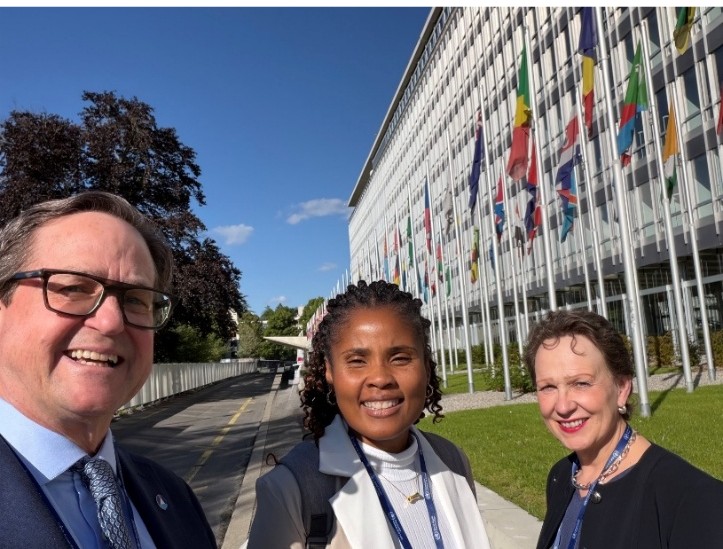
Of course, the main focus for the week was the WHO 79th World Health Assembly, the decision-making body of the World Health Organization where Member States meet annually to set global health priorities, consider reports and resolutions, and provide direction on WHO’s program of work. Non-State Actors in official relations with WHO, including IADR, are able to contribute to these deliberations by delivering statements under relevant agenda items, either individually or through constituency statements developed with partner organizations.
Throughout WHA79, IADR emphasized oral health as an essential component of global health, primary health care, universal health coverage, and the broader noncommunicable disease agenda. Across multiple agenda items, IADR delivered and supported interventions and constituency statements emphasizing the need to integrate oral health into prevention-oriented health systems, strengthen research and implementation science, address shared risk factors, and ensure that oral health is reflected in policy discussions on primary health care, NCDs, antimicrobial resistance, artificial intelligence in health, communicable diseases, maternal, infant and young child nutrition, workplace well-being, and healthy ageing. Daily updates published by WHO can be found here.
Agenda Item 12.1: Follow-up to the political declaration of the high-level meeting of the General Assembly on the prevention and control of non-communicable diseases
IADR incorporated oral health within three constituency statements in response to this agenda item:
- International Society of Nephrology (lead) - advanced circulatory health as an integrated approach to cardiovascular disease, diabetes, kidney disease, chronic respiratory conditions, and related oral diseases. It called for implementation of the political declaration through integrated primary care, UHC benefit packages, prevention and early detection, equitable access, and trained health workforces.
- International Society of Paediatric Oncology (lead) - called for translating global NCD commitments into concrete national policies and programs for children. It emphasized childhood cancer and other childhood NCDs, including oral health conditions, and urged investment in multidisciplinary care, trained health teams, quality medicines and equipment, surveillance, monitoring, and accountability.
- Multiple Sclerosis International Federation (lead) - supported implementation of the UN political declaration on NCDs, with emphasis on integrated, person-centered approaches across the life course. It highlighted neurological conditions, mental health conditions, and oral diseases, called for improved diagnosis, access to treatment, rehabilitation systems integrated into NCD strategies and UHC.
Agenda Item 12.3: Communicable Diseases, Immunization Agenda 2030, and NTD Road Map
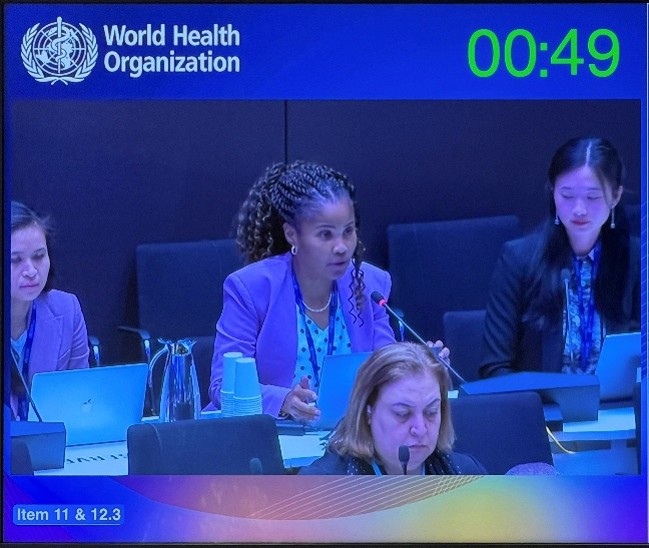
IADR’s statement highlighted oral health within communicable disease and NTD discussions. It called for strengthening HPV vaccination for girls and boys to prevent HPV-related oral and oropharyngeal cancers, and urged Member States to advance noma prevention and control through financing, workforce capacity, research, surveillance, early detection, referral, treatment, and rehabilitation within primary health care. Watch the intervention here.
Agenda Item 12.5: Primary Health Care — IADR Constituency Statement
Delivered by Professor Gallagher on behalf of a broad coalition, this statement emphasized that there is “No Health Without Oral Health.” It called for essential oral health services to be integrated into primary health care and UHC, noting links between oral health and obesity, diabetes, cardiovascular disease, stroke, kidney disease, cancer, adverse pregnancy outcomes, bleeding disorders, and respiratory infections. It also urged investment in early-life interventions, prevention-oriented systems, community-based services, implementation research, and disaggregated data systems. In addition to the IADR, the constituency statement was supported by 11 other Non-State Actors in Official Relations with the WHO: (i). Amref Health Africa, (ii). FDI World Dental Federation, (iii). Global Health Council, (iv). Global Health Partnerships (formerly THET), (v). Global Self-Care Federation, (vi). International Diabetes Federation, (vii). International Federation of Biomedical Laboratory Sciences, (viii). International Society of Nephrology, (ix). Multiple Sclerosis International Federation, (x). World Federation of Hemophilia, and (xi). World Obesity Federation. Watch the intervention here.
Note: constituency statements carry more weight as they are slightly longer than individual statements and they are delivered in between member-state interventions as opposed to the individual statements which are read after all the member states have had their opportunity to speak. It was important that IADR lead this statement about the integration of oral health within primary health care.
Agenda Item 12.9: Antimicrobial Resistance
IADR’s Antimicrobial Resistance (AMR) statement positioned oral health care as an important setting for antimicrobial stewardship. It called for oral health to be included in national AMR action plans, with stronger prevention, infection prevention and control, evidence-based clinical guidance, prescribing surveillance, laboratory and regulatory systems, and context-specific implementation research. Watch the intervention here.
Agenda Item 12.10: Digital Health and Artificial Intelligence
IADR’s statement welcomed harmonized governance for data, digital health, and AI while emphasizing that these tools must be safe, ethical, interoperable, and equitable. It called for oral health to be included in national digital health strategies, standards, workforce training, and research investments, with AI tools built on representative data, validated across diverse populations, guided by accountability, and monitored over time. Watch the intervention here.
Agenda Item 15.2: Well-being and Health Promotion
This joint statement with the FDI World Dental Federation, framed workplaces as vital settings for prevention and health promotion, noting the global burden and economic cost of oral diseases. It urged Member States to engage employers and workplaces in integrated health promotion initiatives that include oral health and to invest in research and programs that identify scalable models for well-being and health promotion.
Agenda Item 15.4: Maternal, Infant, and Young Child Nutrition
This joint statement with the FDI World Dental Federation, emphasized the connection between early-life nutrition and oral health, particularly early childhood caries prevention. It encouraged Member States to protect breastfeeding, limit exposure to free sugars, restrict digital marketing of breast-milk substitutes and unhealthy foods high in free sugars, and strengthen implementation research and data systems to track nutrition and oral health outcomes in underserved populations. Watch the intervention here.
Agenda Item 15.5: Economics of Health for All
This WHPA-led constituency statement, co-signed by IADR, emphasized that an economy of health for all requires sustained investment in the health workforce. It outlined the importance of workforce well-being, education, women’s leadership, equitable health worker mobility, research-informed workforce policies, and the economic return of investing in health systems, while supporting adoption of the draft strategy on the Economics of Health for All.